


A siren on the wall tells the street something happened. Monitoring tells a person. The panel sends a signal, someone checks it, and the right call goes out. That is the whole job. The rest of this note is what that looks like in practice.
The panel is only the start
The alarm panel, the sensors, and the communicator live on site. When a zone trips, the communicator sends an event to the monitoring room. A door, a detector, a panic button, and a power fail are different events. The room sees which one it was, and when.
Nothing useful happens if that signal never leaves the building. A monitored system needs a path off site, usually the internet with a mobile backup. If both paths drop, the room should see a fail, not silence.
Who gets the call
The monitoring room works from a response plan you agree up front. A verified alarm is not the same call as a low battery. For a real event the room calls the names on the list, in the order you set. If nobody answers, the plan says whether the next step is a guard, the police, or both.
- You name the people who can be woken up.
- You say which events are urgent and which can wait until morning.
- You update the list when staff change. An old mobile number is how a real alarm gets missed.
The room does not invent a new plan at 2am. It follows the one on the account.
What you still handle on site
Monitoring does not replace a lock, a camera, or someone who can walk the floor. The room can tell you a roller door opened. Someone still has to decide whether that door should have opened. Cameras help that decision when they are recorded and someone can look.
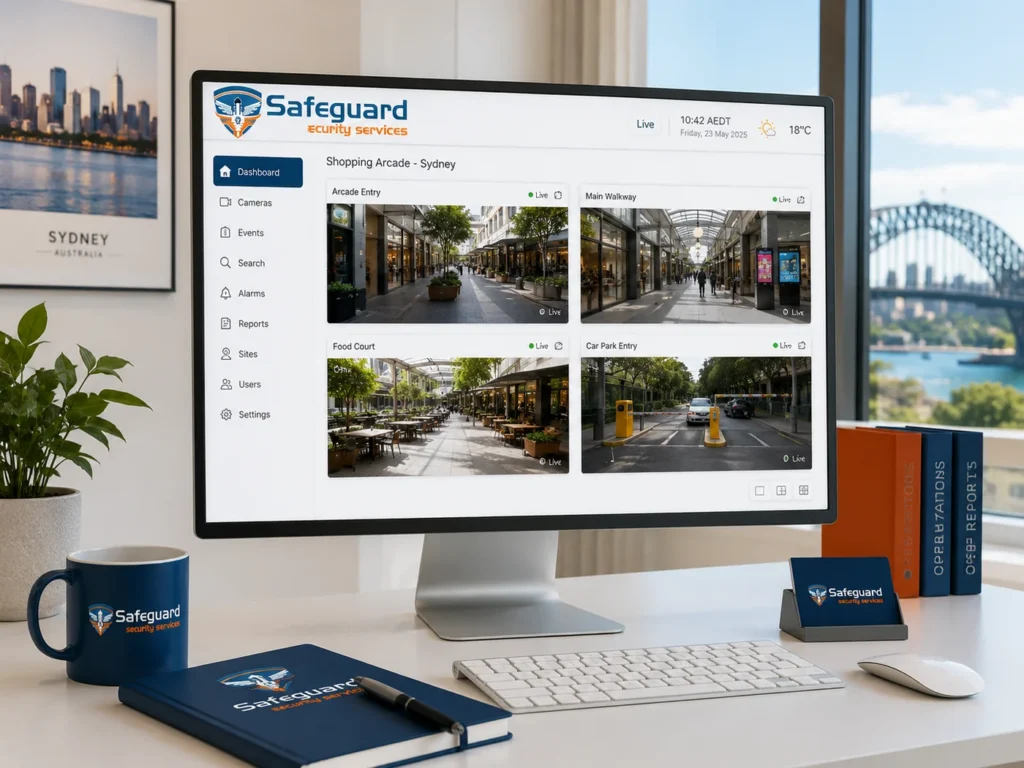
If you want to see how that sits on a working fit-out, the warehouse alarm and CCTV case study is the install side of the same idea.
When monitoring earns its fee
It earns it when the site is empty and an event still needs a person. Workshops after hours, stock rooms, and sites with more than one address are the usual fit. A panel that only makes a noise outside is cheap. It is also easy to ignore.
The fee is monthly, on top of the install. Ask what is included: the response plan, the test schedule, and what happens when a path fails. If those answers are vague, the siren is doing more work than the room.
To talk it through on a real site, contact the team or call 1300 225 276.